China Advances Rapidly in Military Helicopter Technology
Last updated: 11/7/2026 3:05:00 PM
China is making significant progress in developing specialised attack helicopters, versatile military transport aircraft and naval helicopters designed for anti-submarine warfare and amphibious operations. Alongside the rapid expansion of the People's Liberation Army (PLA) helicopter fleet, Beijing is also strengthening its defence industry in an effort to achieve greater technological self-reliance.
A report published on Friday (November 6) by Military Watch Magazine highlighted China's growing capabilities in military helicopter development. According to the report, although the sector has received less international attention than some of China's other defence programmes, it reflects a broader effort to strengthen domestic manufacturing and improve the military's ability to conduct complex operations.
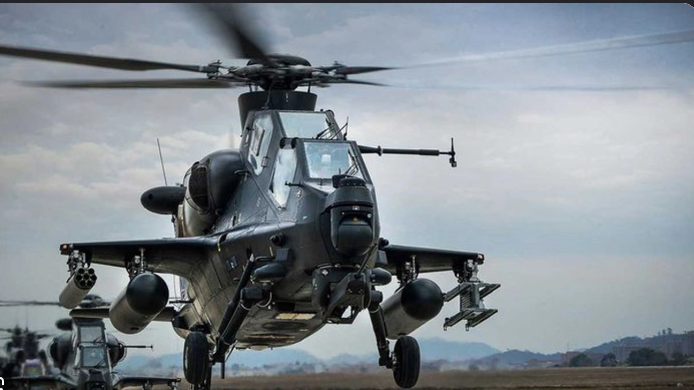
The Z-10 remains one of the main platforms in China's attack helicopter fleet. Following its maiden flight in 2003, the aircraft entered military service in 2010. The two-seat helicopter can carry anti-tank guided missiles, air-to-air missiles and rockets. It is also equipped with electro-optical targeting systems and defensive countermeasures.
Later variants have received improved armour, warning sensors and longer-range guided weapons. The export-oriented Z-10ME version includes additional capabilities, including a millimetre-wave radar mounted above the main rotor. China also operates the smaller Z-19 helicopter, designed for both reconnaissance and attack missions.
Another major development is the Z-21, a larger attack helicopter first publicly seen in 2024. Compared with the Z-10, it features stronger protection, more extensive sensor systems and greater weapons-carrying capacity. The Military Watch report suggests that it could become a serious competitor to foreign platforms such as Russia's Mi-28 and Ka-52 and the United States' AH-64 Apache.
The Z-20 family is another key component of China's helicopter modernisation programme. After its first flight in 2013, its entry into military service was confirmed in 2019. Powered by two WZ-10 turboshaft engines, the helicopter can carry up to 13 personnel with full equipment.
Several variants of the Z-20 have been developed for transport, assault and naval operations. The armed Z-20T is designed for combat missions and can carry guided missiles and rockets. Meanwhile, the naval Z-20F is intended for anti-submarine warfare. It is equipped with a dipping sonar, sonobuoy deployment systems and the capability to carry lightweight torpedoes.
A separate Z-20J variant has been developed for ship-based transport and assault operations. These developments could expand the operational capabilities of China's warships and amphibious assault vessels.
China has also upgraded older helicopter platforms. The Z-8 series has been adapted for transport, search and rescue, electronic warfare and airborne command operations. Meanwhile, Russian-built Mi-17 and Mi-171 helicopters continue to play an important role in China's military transport fleet, particularly in operations requiring specialised support in challenging environments.
The Chinese Navy also operates Russian-made Ka-28 helicopters for anti-submarine warfare and Ka-31 platforms for airborne radar surveillance. However, continued development of ship-based Z-20 variants could gradually reduce Beijing's dependence on these foreign-built aircraft.
China is also expected to pursue the development of a heavier-lift helicopter capable of competing with Russia's Mi-26, which currently holds a leading position in the heavy-lift category.
Overall, China's expanding helicopter programmes reflect a broader strategy to strengthen its military capabilities across attack, transport, naval and specialised operations. Continued investment in domestic helicopter technology could further enhance the country's defence self-reliance and strategic position in the region.
Diya Hossain/M.
Conditions:
You cannot use abusive words/sentences. You can't sneer at anyone. You cannot give aggressive statement to anyone.
More Capital (রাজধানী)